
E-Shots and campaign email follow-up

Prepare a targeted HTML message for a campaign, review the eligible audience and check the sending connection before delivery. E-Shots keep campaign email and engagement reporting alongside prospect follow-up.

Request a demo

Compose a campaign message

Write the subject and message alongside the selected client, project and campaign. Review the audience before sending; the demonstration draft shown here has not been sent.

Choose the campaign and review its audience

Start with the project and campaign the message belongs to. Narrow recipients using the available outcome selection and inspect the eligible-recipient preview. The preview is a working check of the audience, not evidence that every address may lawfully receive marketing.

For an illustrative follow-up, use fictional contacts representing a requested-information conversation, a Not Interested outcome and an email opt-out. Check which records remain eligible before composing the message. Demonstrations should use approved test recipients, never a live prospect list.

Not Interested and Do Not Call outcomes across the project, opted-out contacts, flagged email addresses and project email suppressions are excluded by the audience rules. The agency must still establish lawful use of the remaining contacts and maintain its suppression processes.

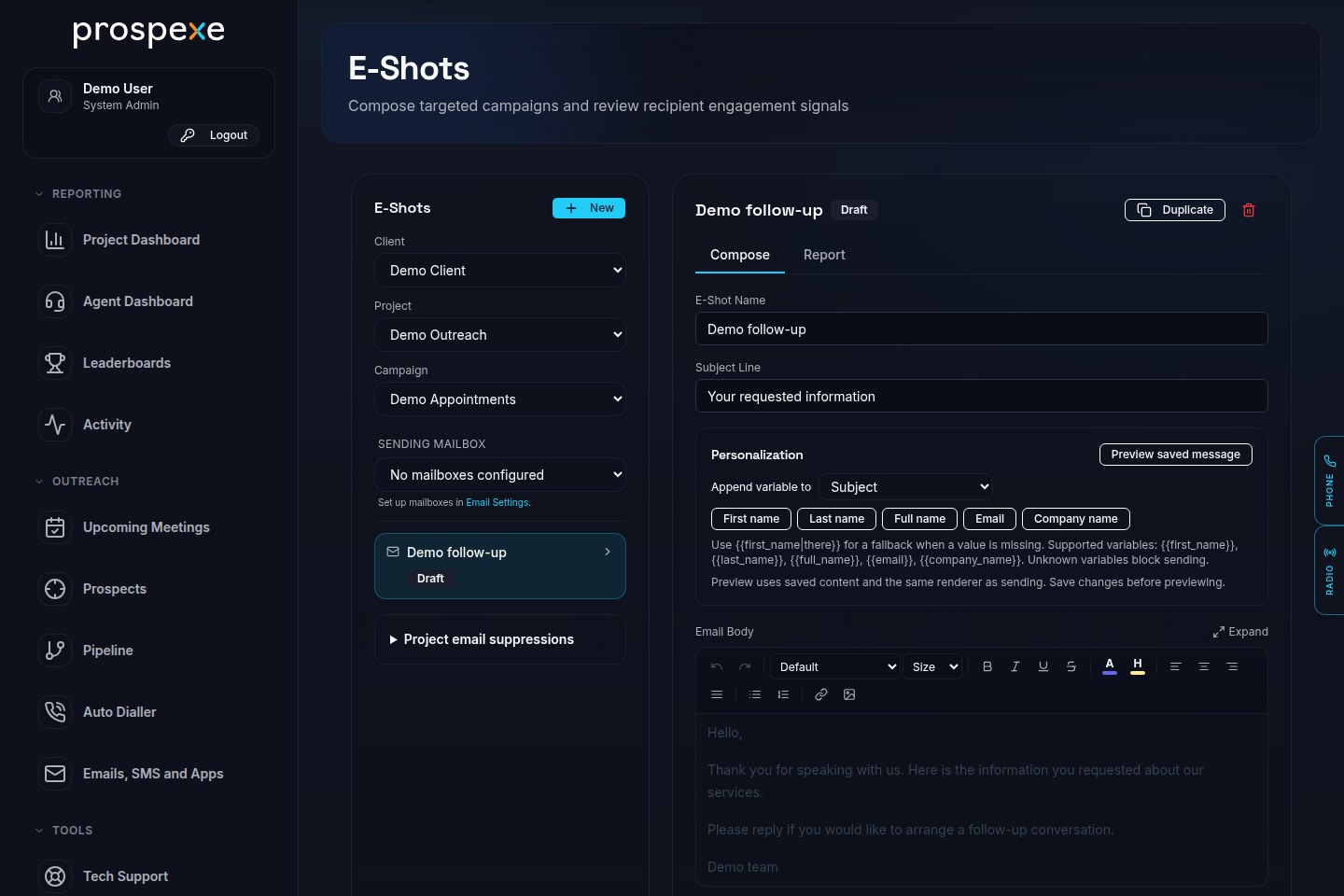
Prepare the HTML message and project SMTP connection

Compose the subject and HTML message within the selected project. Reusable email templates help the team prepare consistent follow-up messages.

E-Shot delivery uses the project's configured SMTP settings. A Gmail or Outlook authorisation elsewhere in the CRM does not configure this connection. Provider sending limits and delivery outcomes still apply.

Check eligibility again before sending

Review the eligible count and outcome selection before confirming a send. If the recipient preview cannot load, sending is unavailable until it can be checked. A contact's status may have changed since the list was imported or the message was drafted.

An imported address does not establish consent or another lawful basis. Review applicable marketing rules, unsubscribe obligations and retention arrangements with the people responsible for the campaign.

Use engagement signals carefully

E-Shot reporting brings recipient engagement signals alongside the campaign message, helping the team review delivery and follow-up in context.

Mail privacy tools and automated link checks can affect engagement signals. An open or click is not proof that a person read the message, intends to buy or has agreed to further marketing. Avoid turning an engagement count into a claimed lead result.

Keep the next conversation with the prospect

Prospect history, outcomes and callbacks keep the next conversation in context. The team can record a requested follow-up without treating it as permission for a wider marketing sequence.

The public sales enquiry form does not automatically enrol a visitor in E-Shots or nurture. Before any automated marketing programme, establish its audience, lawful basis, suppression and unsubscribe handling, sending configuration and responsible owner.

Frequently asked questions

Can I send an E-Shot to every imported email address?

No. Imports do not establish permission to send. Review the campaign audience, lawful basis and exclusions. Not Interested, Do Not Call, opt-out, flagged-address and project suppression rules restrict eligibility.

Does connecting Gmail or Outlook enable E-Shot delivery?

Do not assume so. E-Shots use the project's configured SMTP settings. Verify that sender and connection separately from other email connections in the CRM.

What happens if the audience preview fails?

Sending is unavailable until the recipient preview can be checked. Review the eligible count and selected outcomes before confirming the send.

Does a recorded open prove the recipient read the email?

No. Privacy tools and automated activity can affect engagement signals. Use the report as context for follow-up, not proof of reading, buying intent or permission for further marketing.